Buy mfsc.eu ?
We are moving the project
mfsc.eu .
Are you interested in purchasing the domain
mfsc.eu ?
domain@kv-gmbh.de · 0541-91531010
Buy mfsc.eu ?
How can one prove transitivity?
Transitivity can be proven by showing that if A is related to B and B is related to C, then A is related to C. This can be demonstrated through a series of logical steps or by providing concrete examples that illustrate the relationship between the elements. Additionally, one can use a formal proof by assuming the premises of transitivity and deriving the conclusion that follows. Overall, proving transitivity involves establishing a clear and consistent relationship between the elements involved. **
How to check the transitivity of relations?
To check the transitivity of relations, you need to examine all possible combinations of elements in the relation. If for every pair of elements (a, b) and (b, c) in the relation, there is also a relation between (a, c), then the relation is transitive. If there is at least one pair of elements (a, b) and (b, c) where there is a relation, but no relation between (a, c), then the relation is not transitive. By systematically checking all possible combinations, you can determine if a relation is transitive or not. **

Similar search terms for Transitivity
Top-Angebote
Products related to Transitivity:
-
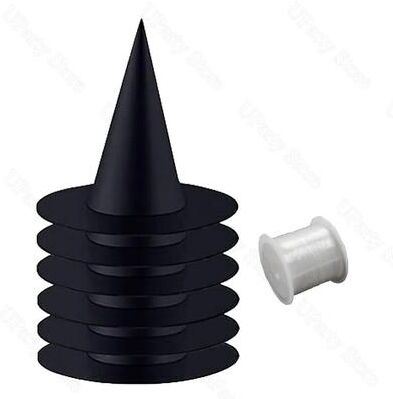
Inspired Living Floating Witch Hats Halloween Hanging Decorations 6 12 Piece Black Witch Hat Set 12pcs HatsTurn your home into an enchanting Halloween scene with hanging witch hats that appear to float overhead. These classic black hats add instant spooky charm to porches, ceilings, trees, entryways, and party spaces. Designed for anyone who loves easy,...42,97 $*Shipping: 0,00 $Secure redirect to the provider
-
Uplifted Finds Hanging Black Witch & Wizard Hats Bulk Set With Hanging Rope For Outdoor & Home Decor 6pcs HatsCast a spell of haunting enchantment over your space with this Hanging Black Witch Hats Bulk Set! Complete with durable hanging rope, these classic pointed witch and wizard hats create the magical illusion of floating headwear when suspended from...48,97 $*Shipping: 0,00 $Secure redirect to the provider
-
Uplift Treasures Halloween Hanging Witch Hats Set For Indoor And Outdoor Decorations 6pcs HatsProduct Description: Transform your home into a magical Halloween scene with these hanging black witch hats. Each hat comes with a hanging rope, making it easy to create the popular floating hat effect on porches, ceilings, trees, and party spaces....46,97 $*Shipping: 0,00 $Secure redirect to the provider
-
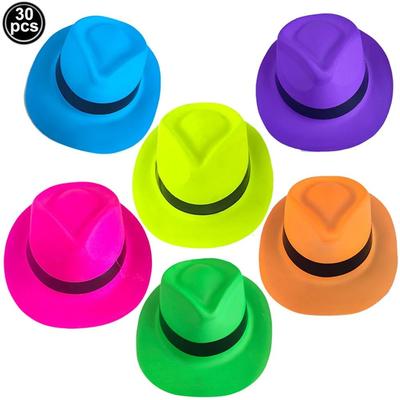
Uplift Picks Neon Party Fedora Hats Glow Bright Under UV Blacklight Party Celebrations hats (36 Pcs)Turn any dark party into a vibrant crowd moment with neon party hats designed to fluoresce under UV blacklight. Their bright colors stand out during dances, concerts, birthdays, and themed events while adding an easy costume accessory for guests....155,00 $*Shipping: 0,00 $Secure redirect to the provider


-
How to test the transitivity of relations?
To test the transitivity of relations, you can use a simple method called the chaining method. This involves taking three elements (a, b, and c) and checking if a is related to b and b is related to c, then a should also be related to c. If this holds true for all possible combinations of elements, then the relation is transitive. Another way to test transitivity is by constructing a matrix representation of the relation and checking if the matrix is transitive. If the matrix satisfies the transitive property, then the relation is transitive. **
-
How to check reflexivity, antisymmetry, and transitivity?
Reflexivity can be checked by verifying if every element in the set relates to itself. Antisymmetry can be checked by ensuring that if (a, b) and (b, a) are in the relation, then a must be equal to b. Transitivity can be checked by confirming that if (a, b) and (b, c) are in the relation, then (a, c) must also be in the relation. These properties can be verified by examining the elements and pairs in the relation and applying the definitions of reflexivity, antisymmetry, and transitivity. **
-
How do you test the transitivity of relations?
To test the transitivity of relations, you can examine a set of three elements (a, b, c) and check if the relation holds true for each pair of elements. If (a, b) and (b, c) are both in the relation, then you can determine if (a, c) is also in the relation. If the relation holds true for all possible combinations of elements, then it is transitive. This process helps to ensure that the relation follows the property of transitivity. **
-
How do you check reflexivity, antisymmetry, and transitivity?
To check reflexivity, we verify if every element in the set relates to itself. For antisymmetry, we confirm that if (a,b) and (b,a) are both in the relation, then a must equal b. Finally, to check transitivity, we ensure that if (a,b) and (b,c) are in the relation, then (a,c) must also be in the relation. These properties are fundamental in determining if a relation is an equivalence relation or a partial order. **

What is the difference between transitivity and adjacency?
Transitivity refers to the property of a relation where if A is related to B and B is related to C, then A is also related to C. In other words, it involves the chaining of relationships. Adjacency, on the other hand, refers to the property of being directly next to or connected to something else. In the context of graphs, adjacency refers to the relationship between two nodes that are directly connected by an edge. In summary, transitivity involves the indirect chaining of relationships, while adjacency involves direct connections. **
What can be done against sweaters and scarves that are shedding?
To reduce shedding in sweaters and scarves, you can try washing them inside out in cold water with a gentle detergent to help minimize the shedding. Additionally, using a fabric softener or conditioner during the wash can help to reduce static and keep the fibers in place. After washing, air dry the items instead of using a dryer, as the heat can cause more shedding. Finally, using a lint roller or a fabric shaver can help to remove any excess shedding from the garments. **
Top-Angebote
Products related to Transitivity:
-
Uplift Treasures Halloween Hanging Witch Hats Set For Indoor And Outdoor Decorations 12pcs HatsProduct Description: Transform your home into a magical Halloween scene with these hanging black witch hats. Each hat comes with a hanging rope, making it easy to create the popular floating hat effect on porches, ceilings, trees, and party spaces....67,97 $*Shipping: 0,00 $Secure redirect to the provider
-
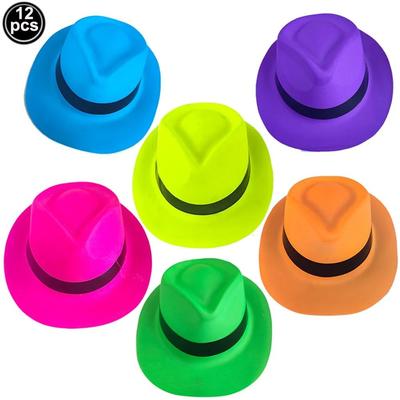
Uplift Picks Neon Party Fedora Hats Glow Bright Under UV Blacklight Party Celebrations hats (12 Pcs)Turn any dark party into a vibrant crowd moment with neon party hats designed to fluoresce under UV blacklight. Their bright colors stand out during dances, concerts, birthdays, and themed events while adding an easy costume accessory for guests....85,00 $*Shipping: 0,00 $Secure redirect to the provider
-
Inspired Living Floating Witch Hats Halloween Hanging Decorations 6 12 Piece Black Witch Hat Set 12pcs HatsTurn your home into an enchanting Halloween scene with hanging witch hats that appear to float overhead. These classic black hats add instant spooky charm to porches, ceilings, trees, entryways, and party spaces. Designed for anyone who loves easy,...42,97 $*Shipping: 0,00 $Secure redirect to the provider
-
Uplifted Finds Hanging Black Witch & Wizard Hats Bulk Set With Hanging Rope For Outdoor & Home Decor 6pcs HatsCast a spell of haunting enchantment over your space with this Hanging Black Witch Hats Bulk Set! Complete with durable hanging rope, these classic pointed witch and wizard hats create the magical illusion of floating headwear when suspended from...48,97 $*Shipping: 0,00 $Secure redirect to the provider
-
How can one prove transitivity?
Transitivity can be proven by showing that if A is related to B and B is related to C, then A is related to C. This can be demonstrated through a series of logical steps or by providing concrete examples that illustrate the relationship between the elements. Additionally, one can use a formal proof by assuming the premises of transitivity and deriving the conclusion that follows. Overall, proving transitivity involves establishing a clear and consistent relationship between the elements involved. **
-
How to check the transitivity of relations?
To check the transitivity of relations, you need to examine all possible combinations of elements in the relation. If for every pair of elements (a, b) and (b, c) in the relation, there is also a relation between (a, c), then the relation is transitive. If there is at least one pair of elements (a, b) and (b, c) where there is a relation, but no relation between (a, c), then the relation is not transitive. By systematically checking all possible combinations, you can determine if a relation is transitive or not. **
-
How to test the transitivity of relations?
To test the transitivity of relations, you can use a simple method called the chaining method. This involves taking three elements (a, b, and c) and checking if a is related to b and b is related to c, then a should also be related to c. If this holds true for all possible combinations of elements, then the relation is transitive. Another way to test transitivity is by constructing a matrix representation of the relation and checking if the matrix is transitive. If the matrix satisfies the transitive property, then the relation is transitive. **
-
How to check reflexivity, antisymmetry, and transitivity?
Reflexivity can be checked by verifying if every element in the set relates to itself. Antisymmetry can be checked by ensuring that if (a, b) and (b, a) are in the relation, then a must be equal to b. Transitivity can be checked by confirming that if (a, b) and (b, c) are in the relation, then (a, c) must also be in the relation. These properties can be verified by examining the elements and pairs in the relation and applying the definitions of reflexivity, antisymmetry, and transitivity. **
Similar search terms for Transitivity
-
Uplift Treasures Halloween Hanging Witch Hats Set For Indoor And Outdoor Decorations 6pcs HatsProduct Description: Transform your home into a magical Halloween scene with these hanging black witch hats. Each hat comes with a hanging rope, making it easy to create the popular floating hat effect on porches, ceilings, trees, and party spaces....46,97 $*Shipping: 0,00 $Secure redirect to the provider
-
Uplift Picks Neon Party Fedora Hats Glow Bright Under UV Blacklight Party Celebrations hats (36 Pcs)Turn any dark party into a vibrant crowd moment with neon party hats designed to fluoresce under UV blacklight. Their bright colors stand out during dances, concerts, birthdays, and themed events while adding an easy costume accessory for guests....155,00 $*Shipping: 0,00 $Secure redirect to the provider
-
Uplift Picks Neon Party Fedora Hats Glow Bright Under UV Blacklight Party Celebrations hats (6 Pcs)Turn any dark party into a vibrant crowd moment with neon party hats designed to fluoresce under UV blacklight. Their bright colors stand out during dances, concerts, birthdays, and themed events while adding an easy costume accessory for guests....63,00 $*Shipping: 0,00 $Secure redirect to the provider
-
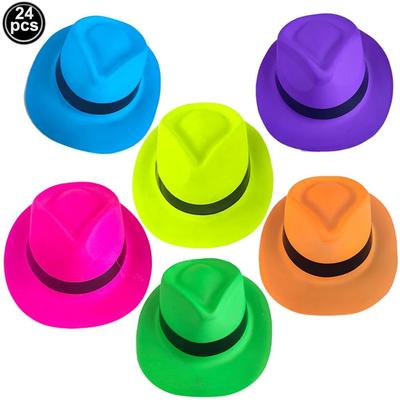
Uplift Picks Neon Party Fedora Hats Glow Bright Under UV Blacklight Party Celebrations hats (24 Pcs)Turn any dark party into a vibrant crowd moment with neon party hats designed to fluoresce under UV blacklight. Their bright colors stand out during dances, concerts, birthdays, and themed events while adding an easy costume accessory for guests....105,00 $*Shipping: 0,00 $Secure redirect to the provider
-
How do you test the transitivity of relations?
To test the transitivity of relations, you can examine a set of three elements (a, b, c) and check if the relation holds true for each pair of elements. If (a, b) and (b, c) are both in the relation, then you can determine if (a, c) is also in the relation. If the relation holds true for all possible combinations of elements, then it is transitive. This process helps to ensure that the relation follows the property of transitivity. **
-
How do you check reflexivity, antisymmetry, and transitivity?
To check reflexivity, we verify if every element in the set relates to itself. For antisymmetry, we confirm that if (a,b) and (b,a) are both in the relation, then a must equal b. Finally, to check transitivity, we ensure that if (a,b) and (b,c) are in the relation, then (a,c) must also be in the relation. These properties are fundamental in determining if a relation is an equivalence relation or a partial order. **
-
What is the difference between transitivity and adjacency?
Transitivity refers to the property of a relation where if A is related to B and B is related to C, then A is also related to C. In other words, it involves the chaining of relationships. Adjacency, on the other hand, refers to the property of being directly next to or connected to something else. In the context of graphs, adjacency refers to the relationship between two nodes that are directly connected by an edge. In summary, transitivity involves the indirect chaining of relationships, while adjacency involves direct connections. **
-
What can be done against sweaters and scarves that are shedding?
To reduce shedding in sweaters and scarves, you can try washing them inside out in cold water with a gentle detergent to help minimize the shedding. Additionally, using a fabric softener or conditioner during the wash can help to reduce static and keep the fibers in place. After washing, air dry the items instead of using a dryer, as the heat can cause more shedding. Finally, using a lint roller or a fabric shaver can help to remove any excess shedding from the garments. **
* All prices are inclusive of VAT and, if applicable, plus shipping costs. The offer information is based on the details provided by the respective shop and is updated through automated processes. Real-time updates do not occur, so deviations can occur in individual cases. ** Note: Parts of this content were created by AI.